Autumn Equinox / Mabon:
A Celebration of Harvest, Balance, and Gratitude
The Autumn Equinox, known in Esoteric High Magick circles as the Festival of the Element of the Physical, is a powerful turning point in the Wheel of the Year, when day and night stand in nearly perfect balance before darkness begins to claim more of the sky. The Equinox itself occurs on one precise day, when the Sun crosses the celestial equator, and its energy is strongest on that day. Yet the current can be felt strongly for approximately a week surrounding it—three days before and three days after, as the season shifts from the outward abundance of summer toward the inward movement of autumn. This is the time of harvest, when what has been cultivated can finally be gathered, examined, and brought into the physical world.
For the practitioner, this earthly current brings attention to what is tangible, established, and real. The Element of the Physical calls us to look at what we have created, what we have built, and what we are now ready to preserve or release. Just as nature gathers the fruits of its labor before entering its quieter season, we are invited to recognize our own accomplishments and bring balance to our lives. The Equinox reminds us that every period of expansion must eventually be followed by a period of reflection, preparation, and renewal.
For the ancient Egyptians, the changing position of the Sun and the cycles of agricultural life were deeply woven into their spiritual understanding of existence. Their calendar did not contain a festival specifically called the Autumn Equinox, but the seasonal rhythm of the Nile, the fields, the Sun, and the agricultural year was central to Egyptian life. The period surrounding the modern autumn equinox fell within the broader agricultural and religious cycles associated with the retreat of the Nile flood and the preparation and sowing of the land. Offerings to the gods, especially those connected with fertility, agriculture, death, and renewal, expressed gratitude for what had been given and trust in the continuation of the cycle.
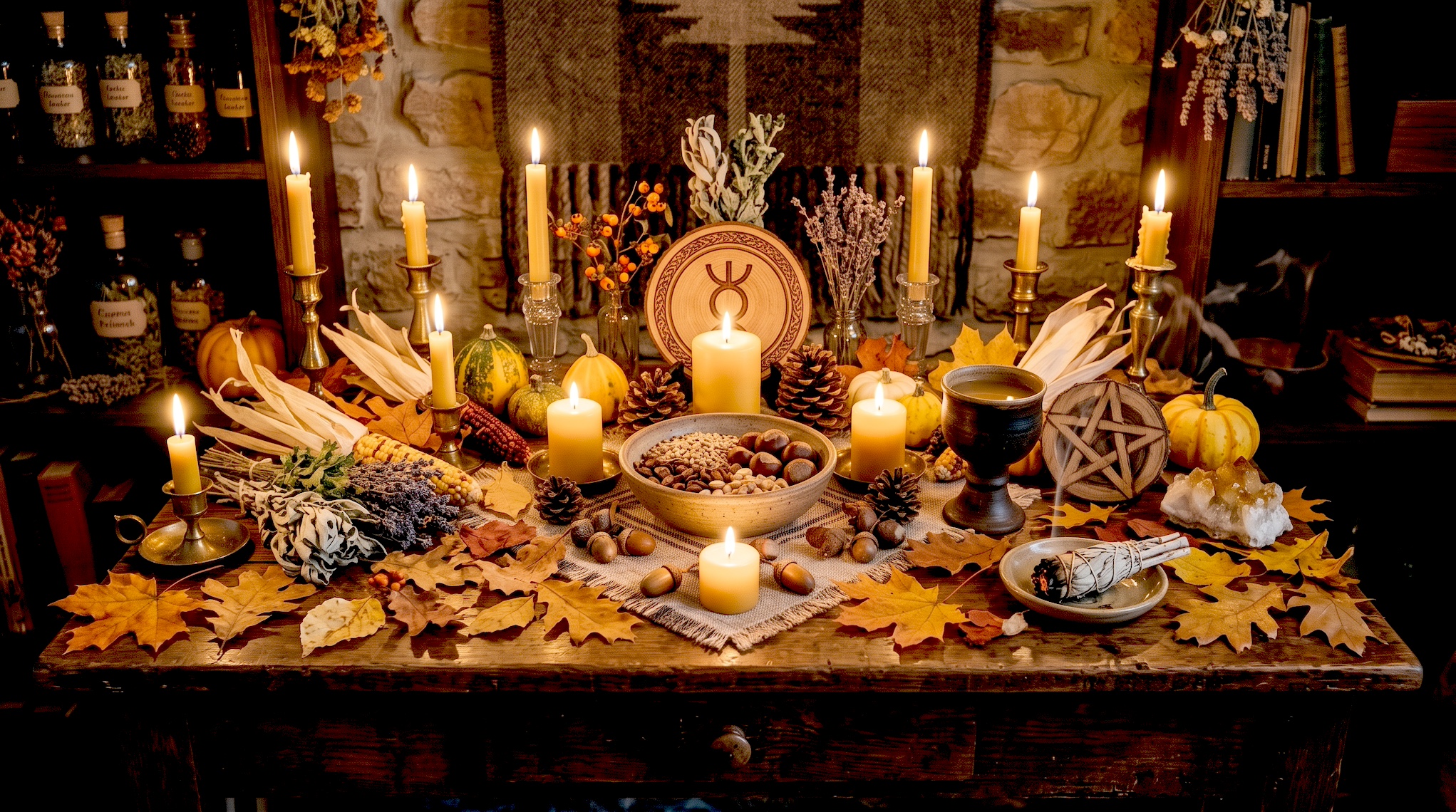
In some Pagan communities, the Autumn Equinox is known as Mabon, a modern name for this seasonal turning point and one of the three harvest festivals of the Wheel of the Year. It is a time to honor the balance between light and darkness and to give thanks for the abundance gathered from the earth. Many modern Pagans create altars with autumn leaves, grains, apples, gourds, nuts, and other seasonal offerings, while candles, harvest decorations, and shared meals provide a physical expression of gratitude. The emphasis is not simply on the ending of summer, but on recognizing what has come to fruition and preparing oneself for the quieter months ahead.
In Judaism, the autumn season brings one of the most significant harvest celebrations of the year: Sukkot, the Festival of Booths. Beginning on the 15th day of the Hebrew month of Tishrei, Sukkot falls in the early autumn and often occurs close to the time of the Autumn Equinox, although its date does not correspond exactly to the equinox. It is both an agricultural harvest festival and a remembrance of the Israelites’ journey through the wilderness. Families traditionally gather in temporary shelters, share meals, and give thanks for the blessings and provisions of the harvest, creating a beautiful expression of gratitude, impermanence, and trust.
For Christians, the season surrounding the Autumn Equinox has long carried associations with harvest, thanksgiving, and preparation for the darker portion of the year. Michaelmas, celebrated on September 29th, traditionally honors the Archangel Michael and historically became associated in parts of Europe with the completion of the harvest and the changing agricultural year. In many Christian communities, harvest festivals developed as opportunities to gather together, decorate churches with fruits and grains, and offer thanks for the abundance of the earth. The season became a reminder that what has been cultivated through work and care is now ready to be gathered and shared.
Around the globe, cultures have marked the arrival of autumn through celebrations of harvest, family, abundance, and the changing light. In East Asia, the Mid-Autumn Festival centers around the full moon, family gatherings, gratitude, and seasonal harvest traditions, while in Japan, Tsukimi honors the beauty of the autumn moon. Across Europe and other agricultural cultures, autumn has traditionally been a time for gathering grain, fruits, vegetables, and nuts before the colder months arrive. Though customs differ, the underlying theme is remarkably similar: pause, gather what has been cultivated, give thanks for abundance, and recognize that nature is beginning its movement inward.
This Festival of the Physical would not be complete without feasting on the gifts of the autumn harvest. Tables might be filled with roasted root vegetables, pumpkins and winter squash, apples, pears, grapes, cranberries, figs, and hearty grains. Warm breads, roasted nuts, mushrooms, potatoes, carrots, beets, onions, and fragrant herbs such as sage, rosemary, thyme, and marjoram bring the earthy richness of the season to the table. Apples baked with cinnamon, pear and walnut dishes, hearty soups, roasted meats, and warm spiced beverages complete a feast that celebrates the abundance of the land before winter’s quiet arrives.
For the practitioner of High Magick, the Autumn Equinox is fertile ground for grounding, manifestation, and reflection upon what has already been brought into physical form. This is the moment to examine your creations, not only the material things you have accumulated, but the ideas, relationships, experiences, and intentions that have taken root in your life. Stand firmly upon the earth, recognize the balance within yourself, and give gratitude for what has reached fruition. Then consciously release what no longer serves your path, making room for the new cycle that will emerge after the darkness has completed its work.
May you have the energy to harvest your accomplishments, find balance within yourself, and carry forward only what truly belongs upon your path.
Tori Valspirit
© 8/24/26
 Opened ingredient



Leave a Reply